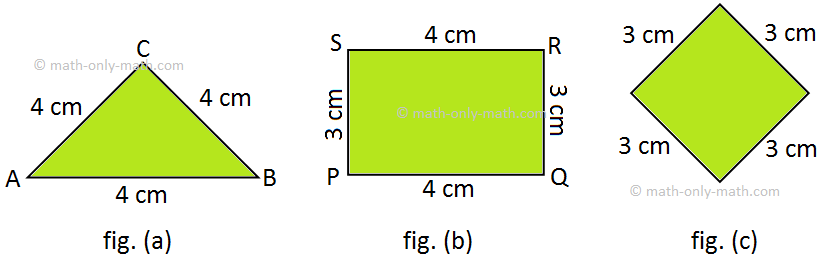
Ever wondered how to measure the boundary of your backyard, frame a cherished photograph, or even understand the distance around a sports field? Learning how to find the perimeter of a figure unlocks a fundamental mathematical skill that extends far beyond the classroom. This comprehensive guide simplifies the concept, breaking down complex ideas into easy-to-understand steps. Well explore why mastering perimeter calculations is crucial for various real-world applications, from home improvement projects to understanding architectural designs. Discover the simple formulas for common shapes like squares, rectangles, and triangles, and gain the confidence to tackle more irregular figures. Prepare to demystify geometry and empower yourself with the knowledge to accurately measure and understand the world around you. This article is your ultimate resource for truly grasping how to find the perimeter of a figure.
Do you ever wonder who uses geometry to measure spaces, or what exactly is the distance around an object? Perhaps you need to know when it is crucial to calculate the boundary of something, or where this skill becomes invaluable in everyday life. Understanding how to find the perimeter of a figure empowers individuals to accurately measure and comprehend the outer edge of any two-dimensional shape. Why is this important? Because whether you are planning a garden fence, framing a picture, or even conceptualizing a construction project, knowing how to determine the perimeter provides the essential blueprint for materials and layout. This guide will walk you through the how, ensuring you grasp the core concepts, simple formulas, and practical applications, making you confident in measuring the world around you. It’s a foundational skill for anyone seeking to master basic geometry and its incredibly useful real-world applications, making once intimidating calculations surprisingly straightforward and incredibly accessible for everyone involved.
Unraveling the Essence: What is Perimeter of a Figure?
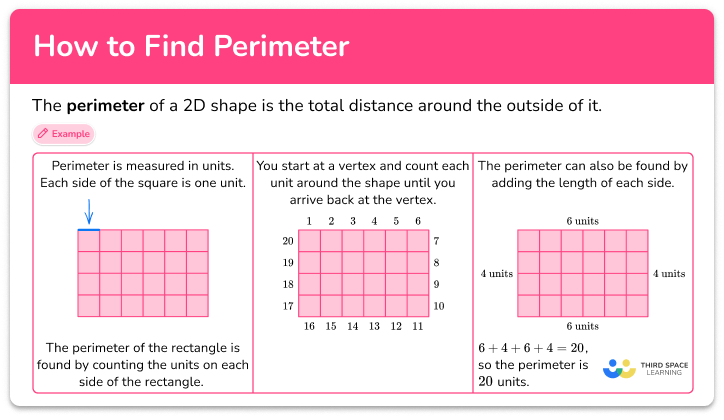
What exactly defines the perimeter of a figure, and why does this concept hold such weight in mathematics and practical applications? Simply put, the perimeter represents the total distance around the outside edge of any two-dimensional shape. Imagine walking along the boundary of a park; the entire distance you cover from your starting point, back to your starting point, is its perimeter. Its a fundamental concept that helps us quantify the extent of an objects outline, crucial for various tasks ranging from simple crafts to complex engineering feats. Why do we need to grasp this definition so clearly? Because understanding this core idea establishes a solid foundation for all subsequent calculations and applications. Without a firm understanding of what perimeter truly means, we might confuse it with other geometric concepts like area or volume, leading to costly errors in real-world scenarios. This clear definition is the first essential step in truly mastering how to find the perimeter of a figure and confidently applying this knowledge. It enables everyone, from students to seasoned professionals, to speak the same geometric language, ensuring clarity and precision in all their measurements and designs.
Practical Power: Why Calculate the Perimeter of a Figure?
When do people truly need to calculate the perimeter, and why is this mathematical ability so incredibly useful in our daily lives? The truth is, determining the perimeter impacts countless everyday activities and professional endeavors. Consider a homeowner planning to install new baseboards in a room; they need the perimeter to buy the correct length of material. A gardener designing a flower bed needs to know the perimeter to purchase enough edging. An athlete tracking the distance around a running track uses the concept of perimeter. Why does this simple measurement hold such profound importance across so many diverse fields? Because it directly informs resource allocation, budgeting, and design. Whether you are an aspiring architect, a creative crafter, or simply managing household projects, understanding how to find the perimeter of a figure saves time, money, and prevents frustrating errors. It empowers you to make informed decisions, ensuring your plans translate accurately from paper to reality. This skill isnt just about numbers; its about practical problem-solving and making sure you have exactly what you need, where you need it, avoiding unnecessary waste or shortages, making it an indispensable tool for everyone.
Mastering Measurements: How to Find the Perimeter of a Figure for Common Shapes?
How do we precisely calculate the perimeter for the most common geometric shapes we encounter every day? While the underlying principle remains the same – summing up all side lengths – specific formulas streamline the process for regular figures. Understanding these shortcuts helps everyone quickly and accurately determine the perimeter, regardless of the shapes complexity. Why is it beneficial to know these distinct methods? Because they provide efficient tools for specific scenarios, accelerating calculations and reducing the chance of error. We will delve into squares, rectangles, triangles, and even the unique case of circles (where we call it circumference). Each shape presents a slightly different approach, yet all stem from the core idea of measuring the boundary. Grasping these individual formulas is key to confidently applying your knowledge across various contexts, making the task of figuring out how to find the perimeter of a figure not just possible, but incredibly simple and intuitive. These practical tools make geometry less about memorization and more about sensible application, empowering you to tackle any measurement challenge that comes your way, big or small.
Calculating the Perimeter of a Rectangle
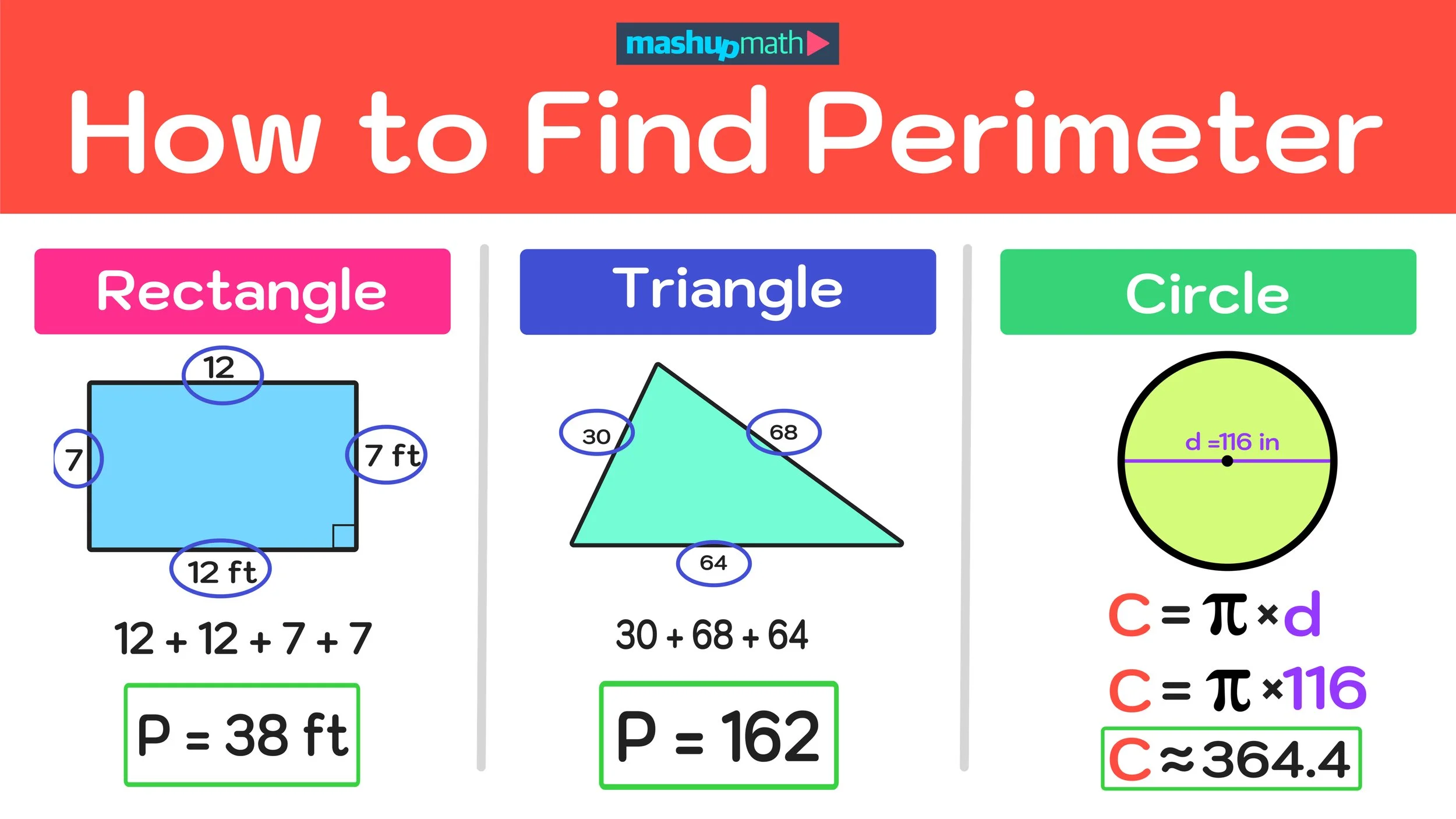
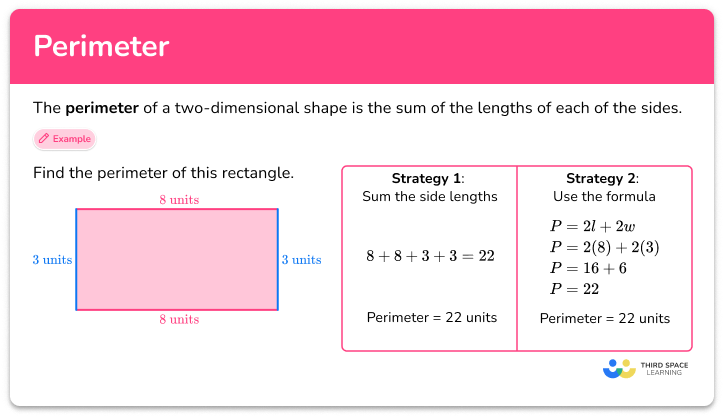
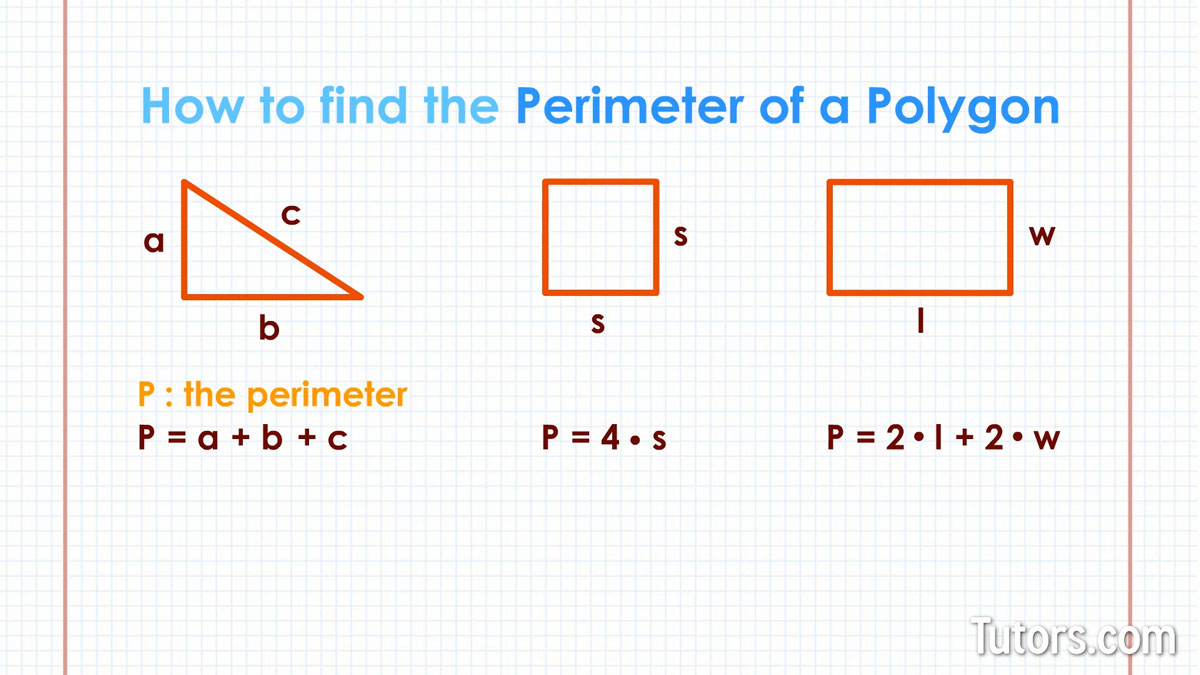
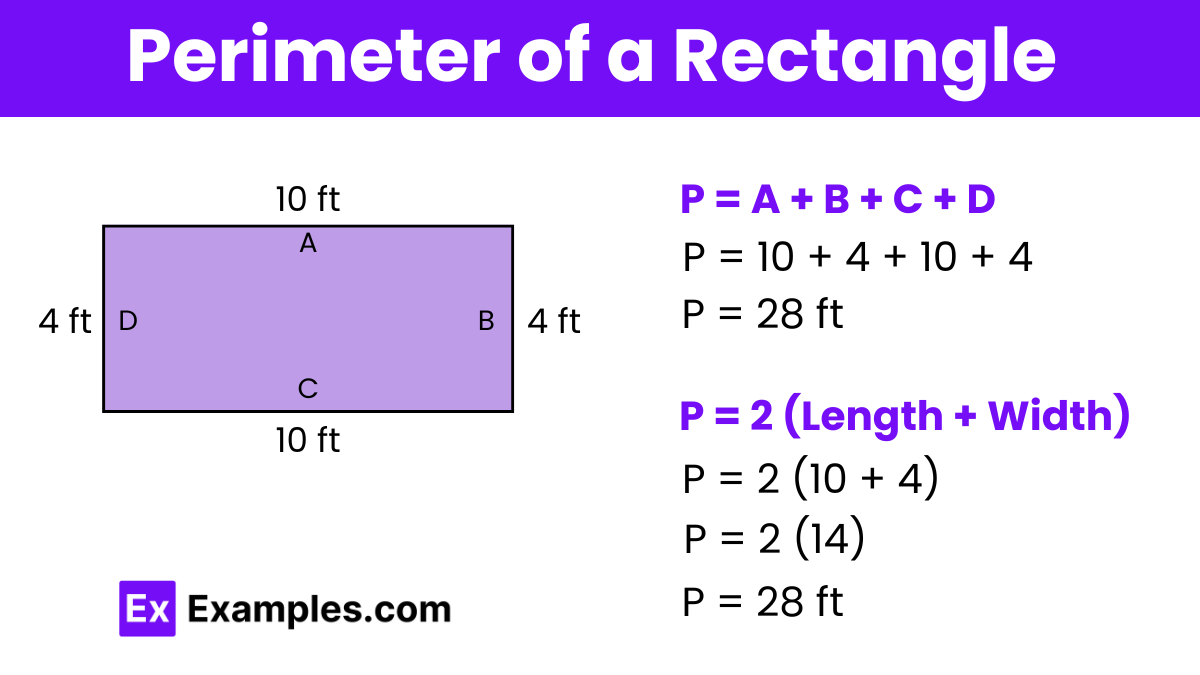
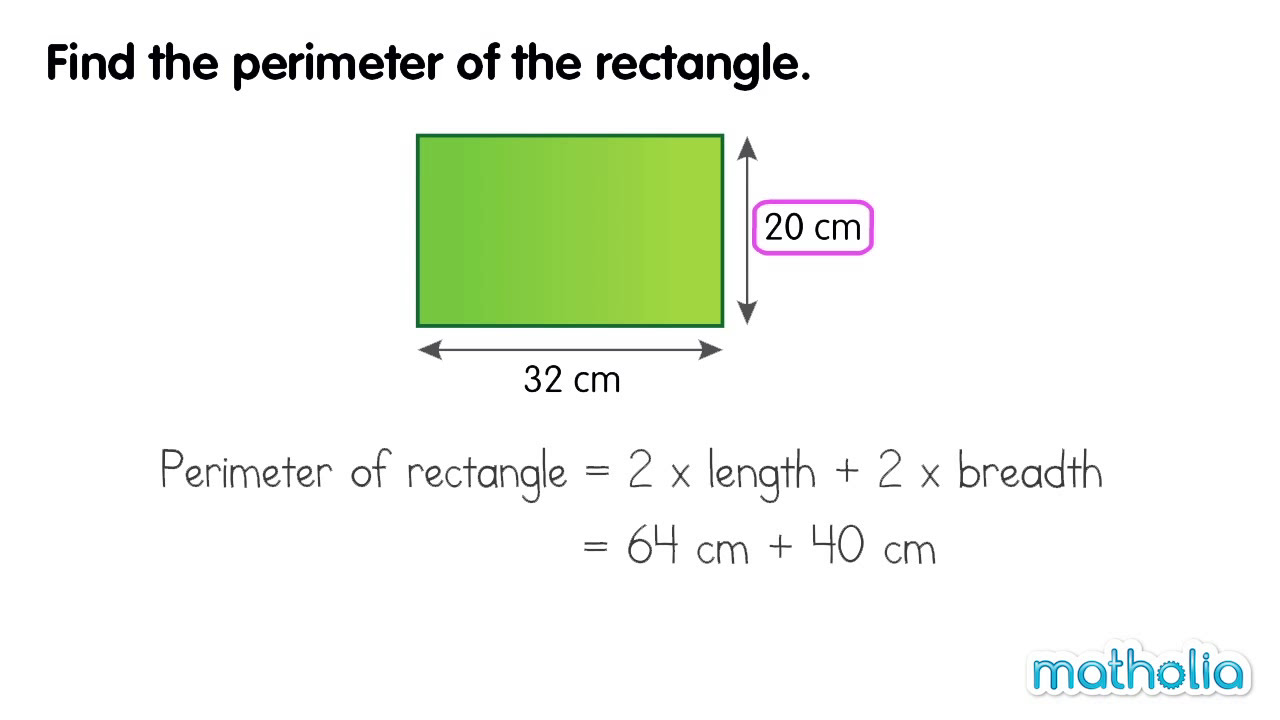
Who frequently works with rectangles, and what is the simplest way to find their perimeter? Rectangles are ubiquitous, appearing in everything from tabletops to building layouts. To calculate the perimeter of a rectangle, you simply add the lengths of all four sides. Since a rectangle has two pairs of equal sides (length and width), a more efficient formula emerges: Perimeter = 2 * (Length + Width). Why use this specific formula? Because it streamlines the calculation, requiring you to measure only the length and width once. Imagine a garden plot that measures 10 feet long and 5 feet wide. To find its perimeter, you would calculate 2 * (10 feet + 5 feet) = 2 * 15 feet = 30 feet. This method provides the total fencing needed for the garden, ensuring you purchase the correct amount without excess or shortage. This straightforward approach demonstrates precisely how to find the perimeter of a figure when dealing with rectangular shapes, making it an indispensable skill for home projects and professional designs alike, helping countless individuals get their measurements right every single time.
Discovering the Perimeter of a Square
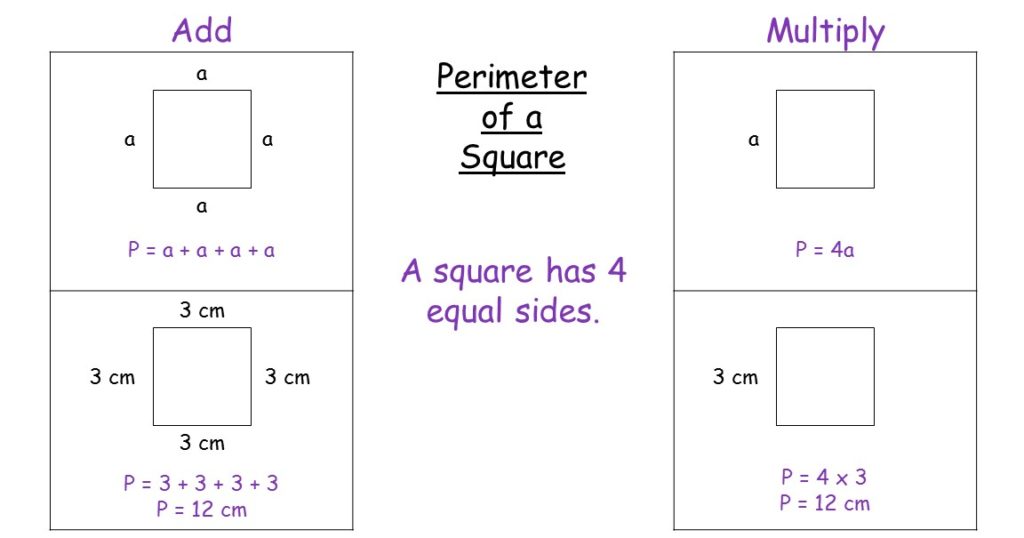
What makes finding the perimeter of a square uniquely simple, and who benefits most from this quick calculation? A square is a special type of rectangle where all four sides possess equal length. This symmetry simplifies the perimeter calculation considerably. Instead of adding four individual side lengths, you can simply multiply the length of one side by four. The formula becomes: Perimeter = 4 * Side. Why is this specific formula so effective? Because it offers an incredibly fast and accurate way to determine the total boundary. For example, if you have a square tile with a side length of 12 inches, its perimeter is 4 * 12 inches = 48 inches. This measurement could be crucial if you are adding decorative edging to the tile or planning the layout for a series of square floor sections. Mastering this technique exemplifies how to find the perimeter of a figure with maximum efficiency for squares, a shape so common in construction, art, and design, making your calculations quick and remarkably precise, saving precious time and resources.
Unlocking the Perimeter of a Triangle
When do we encounter triangular shapes, and how do we approach calculating their perimeter, especially since their sides might not always be equal? Triangles appear in architecture, road signs, and even in the structural supports of bridges. Finding the perimeter of any triangle involves a remarkably direct method: you simply add the lengths of its three sides. The formula is straightforward: Perimeter = Side A + Side B + Side C. Why does this simple addition work for all triangles, regardless of their type (equilateral, isosceles, or scalene)? Because the perimeter is fundamentally about the total distance around the edge, and a triangle, by definition, has three distinct edges. If you have a triangular garden bed with sides measuring 7 feet, 9 feet, and 11 feet, its perimeter would be 7 + 9 + 11 = 27 feet. This sum tells you exactly how much fencing you would need. This method clearly illustrates how to find the perimeter of a figure when that figure is a triangle, ensuring you can confidently measure and plan for any three-sided shape you encounter, bringing clarity to every geometric challenge.
Deciphering the Circumference of a Circle (Perimeters Round Cousin)
Who considers a circles outer boundary, and what special term do we use for its perimeter? For circles, we use the specific term circumference instead of perimeter, but the concept remains identical: its the total distance around the curve. How do we measure this? We use a unique formula involving pi (π), an irrational number approximately equal to 3.14159. The formula for circumference is: Circumference = 2 * π * Radius, or Circumference = π * Diameter. Remember, the diameter is simply twice the radius. Why does a circle require this different approach? Because it lacks straight sides to add up. Pi provides the constant ratio between a circles circumference and its diameter, making these calculations possible. If a circular fountain has a radius of 3 meters, its circumference would be 2 * π * 3 meters ≈ 18.85 meters. This tells you the length of decorative lighting needed. Understanding this concept is key to truly mastering how to find the perimeter of a figure, even when that figure takes on a perfectly round form, helping individuals accurately measure and plan for anything from bicycle wheels to large circular arenas.
Tackling Irregular Polygons: How to Find Perimeter of a Figure
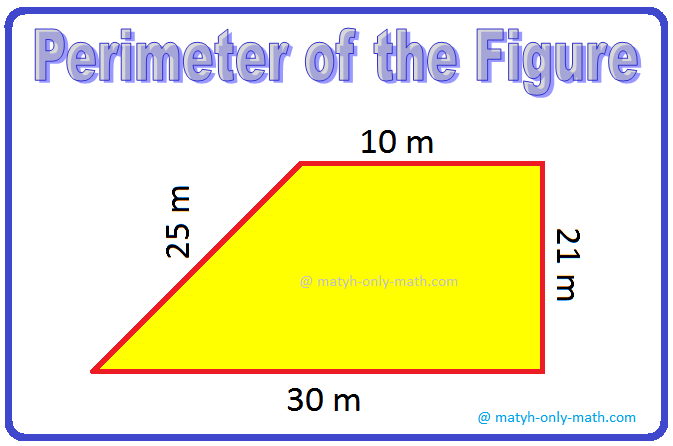
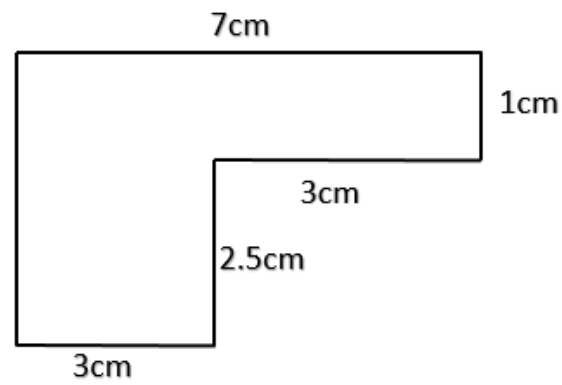
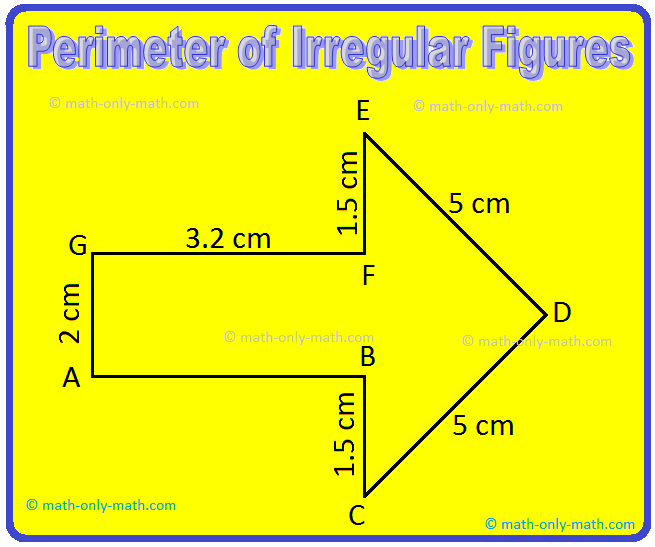
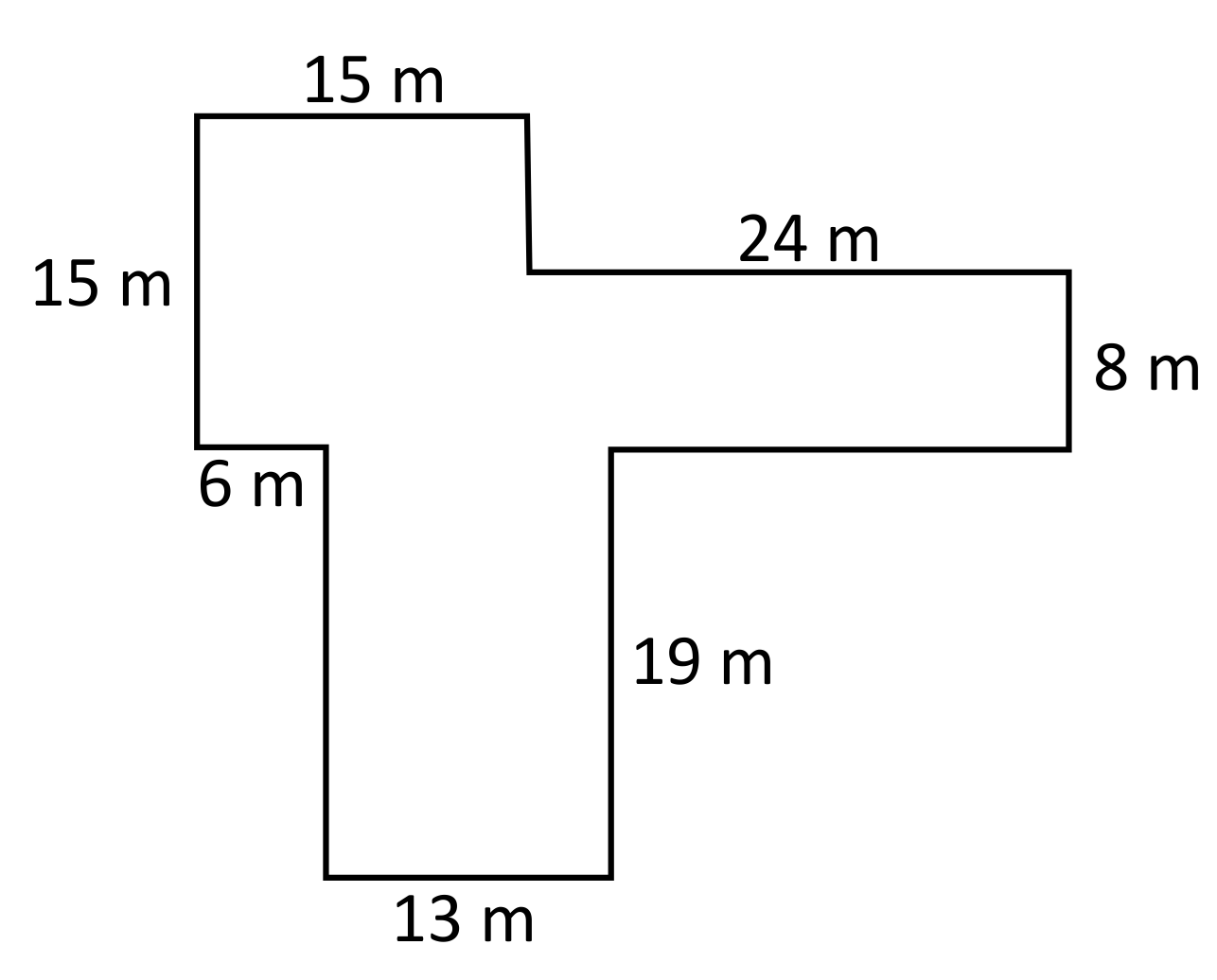
Where do we most frequently encounter irregular polygons, and how do we confidently calculate their perimeter when there isnt a simple, predefined formula? Irregular polygons are everywhere, from the unique shape of a buildings footprint to the outline of a country on a map. These are shapes where sides might have varying lengths and angles. The approach to finding their perimeter reverts to the fundamental definition: add the lengths of all its sides. Why does this straightforward method remain universally effective? Because the perimeter is, at its core, the sum of all boundary segments, regardless of their uniformity. You meticulously measure each individual side, one after the other, and then sum those measurements. For instance, if you have a five-sided garden plot with sides measuring 8 feet, 6 feet, 10 feet, 7 feet, and 12 feet, its perimeter is 8 + 6 + 10 + 7 + 12 = 43 feet. This method ensures accuracy even for the most complex shapes. This demonstrates the ultimate flexibility in how to find the perimeter of a figure, proving that even without a neat formula, methodical measurement leads directly to the correct answer, empowering you to measure any boundary with confidence and precision, no matter how unconventional its shape.
Step-by-Step Guide: Mastering How to Find the Perimeter of a Figure
How does one consistently master the calculation of perimeter for any shape, ensuring accuracy and confidence every time? Embarking on the journey to calculate perimeter becomes significantly easier when you follow a clear, actionable series of steps. This methodical approach empowers you to break down even the most complex figures into manageable parts, ensuring you capture every segment of the boundary. Why is a structured guide so incredibly helpful? Because it eliminates guesswork, provides a reliable framework, and builds a robust understanding that transcends specific formulas, preparing you for any geometric challenge. This process applies whether you are a student learning the basics or a professional requiring precise measurements for a critical project. By internalizing these steps, you not only learn how to find the perimeter of a figure but also develop a systematic problem-solving mindset, a valuable asset far beyond geometry. Let us walk through the process, building your confidence one crucial step at a time, ensuring you feel fully equipped to measure the world around you with remarkable precision and calm assurance, making every calculation a confident success.
1. Identify the Shape: What kind of figure are you working with? Is it a common polygon like a square, rectangle, or triangle, or is it an irregular polygon? Perhaps it’s a circle. Clearly identifying the shape helps you choose the most appropriate calculation method. Why is this initial identification so important? Because it directs you towards the correct formula or strategy, saving time and preventing potential errors from the outset.
2. Gather Your Measurements: How will you obtain the necessary side lengths or the radius/diameter? Use a ruler, measuring tape, or access given dimensions from a diagram. Ensure all measurements use the same unit (e.g., all inches, all meters) for consistency. Why is unit consistency critical? Because mixing units will lead to incorrect totals and inaccurate results, completely undermining your effort.
3. Select the Right Formula/Method: Based on your identified shape, apply the appropriate formula:
- For squares: Perimeter = 4 * Side
- For rectangles: Perimeter = 2 * (Length + Width)
- For triangles: Perimeter = Side A + Side B + Side C
- For circles: Circumference = 2 * π * Radius (or π * Diameter)
- For irregular polygons: Sum the lengths of all individual sides.
Why does choosing the correct formula matter so much? Because it offers the most efficient and accurate path to the solution for that specific geometric configuration.
4. Perform the Calculation: Carefully substitute your measurements into the chosen formula and carry out the arithmetic. Double-check your addition or multiplication to avoid simple calculation errors. Why is this step performed with such care? Because precision here directly translates to the accuracy of your final perimeter value, influencing every subsequent decision based on this measurement.
5. State the Units: Always include the appropriate unit of measurement (e.g., feet, meters, inches, centimeters) with your final answer. The perimeter represents a length, so its unit will be a linear unit, not squared (like area). Why must you include units? Because a number without a unit is just a number; it lacks practical meaning or context in real-world applications, rendering your calculation incomplete and potentially confusing. This final step solidifies your understanding of how to find the perimeter of a figure in a meaningful, practical way, making your results instantly usable and understandable by anyone.
Real-World Relevance: Where Can You Find the Perimeter of a Figure?
Where precisely does the skill of calculating perimeter truly shine, and who consistently applies this knowledge to make practical decisions? The truth is, perimeter calculations form the backbone of countless real-world scenarios, touching almost every industry and aspect of daily life. From the moment you plan a simple home improvement project to the intricate designs of urban planners, understanding this fundamental measurement becomes absolutely indispensable. Why do so many professionals and hobbyists rely on this specific geometric concept? Because it directly informs material estimates, budget planning, and ensures precise layouts for everything from sports fields to entire construction sites. Imagine an interior designer mapping out the border for wallpaper in a living room, or a carpenter needing to cut molding for a frame; both meticulously apply perimeter knowledge. An athletic coach might calculate the distance around a playing field for training purposes, while a city planner might determine the length of a new pedestrian pathway. Each instance showcases the tangible impact of knowing how to find the perimeter of a figure, transforming abstract math into practical solutions that build, create, and organize our physical world with impressive accuracy and foresight, proving its undeniable, widespread utility.
- Home Improvement: Planning for fencing, baseboards, crown molding, weather stripping, or decorative garden edging all require accurate perimeter measurements. This ensures you purchase just enough material without costly waste.
- Construction and Architecture: Architects design building footprints, and construction teams estimate the linear materials needed for foundations, wall framing, and outlining structural elements.
- Landscaping and Gardening: Laying out pathways, designing flowerbeds, or determining the length of irrigation lines relies heavily on perimeter calculations.
- Sports and Recreation: Measuring the boundary of a sports field (track, basketball court, soccer pitch) for official dimensions or training circuits.
- Crafts and Design: Framing pictures, sewing borders on fabrics, or creating outlines for various art projects regularly involve calculating perimeters.
- Urban Planning: Determining the length of new roads, pedestrian zones, or property lines for development projects.
Understanding these diverse applications truly underscores the immense value in knowing how to find the perimeter of a figure. It empowers you to confidently approach a wide array of tasks, transforming abstract numbers into concrete, actionable plans, making every project smoother and more efficient from start to finish, benefiting everyone involved in the process.
Avoiding Pitfalls: Common Mistakes When Calculating How to Find the Perimeter of a Figure
Who makes mistakes when calculating perimeter, and what are the most common errors people accidentally stumble into that we should all actively avoid? Even with a solid understanding of the formulas and methods, small oversights can lead to incorrect perimeter values, causing frustration and wasted resources. Why does paying attention to potential pitfalls become just as important as knowing the formulas themselves? Because recognizing these common missteps empowers you to double-check your work more effectively, ensuring your calculations are consistently accurate. Avoiding these errors guarantees your projects stay on track and your material estimates remain precise. This vigilance is crucial for anyone engaging with measurements, from students completing homework to professionals estimating project costs. Let us highlight these typical blunders, transforming them from hidden traps into clear warning signs that guide you toward accurate results every single time, strengthening your grasp on how to find the perimeter of a figure with unwavering confidence and precision, making sure you always get it right.
- Confusing Perimeter with Area: What is the most frequent mistake, and why do people mix these two up? Perimeter measures the distance around a shape (linear units), while area measures the space inside a shape (square units). This distinction is fundamental. A common error involves calculating the area when the perimeter is required, leading to vastly different results. Always remember: perimeter is for around, area is for inside.
- Missing a Side in Irregular Polygons: How do people overlook parts of a boundary? When dealing with complex or irregular shapes, it is surprisingly easy to forget to add the length of one or more sides. Always visually trace the entire outline of the figure as you add each side to your sum.
- Inconsistent Units: Why does mixing units cause problems? If some measurements are in inches and others in feet, simply adding them will produce an incorrect total. Always convert all measurements to a single, consistent unit before performing any calculations. For example, convert all feet to inches, or all inches to feet, before summing.
- Incorrect Formula Application: When do people use the wrong formula? Sometimes, individuals might apply a squares perimeter formula to a rectangle or incorrectly use the diameter instead of the radius for a circle’s circumference without adjusting. Double-check that the formula matches the specific shape you are measuring.
- Calculation Errors: What is the simplest, yet most frustrating, mistake? Basic arithmetic errors, like incorrect addition or multiplication, can derail an otherwise perfect understanding of perimeter. Always double-check your math, perhaps even using a calculator for complex sums.
By staying mindful of these common mistakes, you significantly enhance your ability to accurately determine how to find the perimeter of a figure, ensuring reliable measurements for all your future endeavors, saving you from headaches and ensuring successful outcomes, every single time.
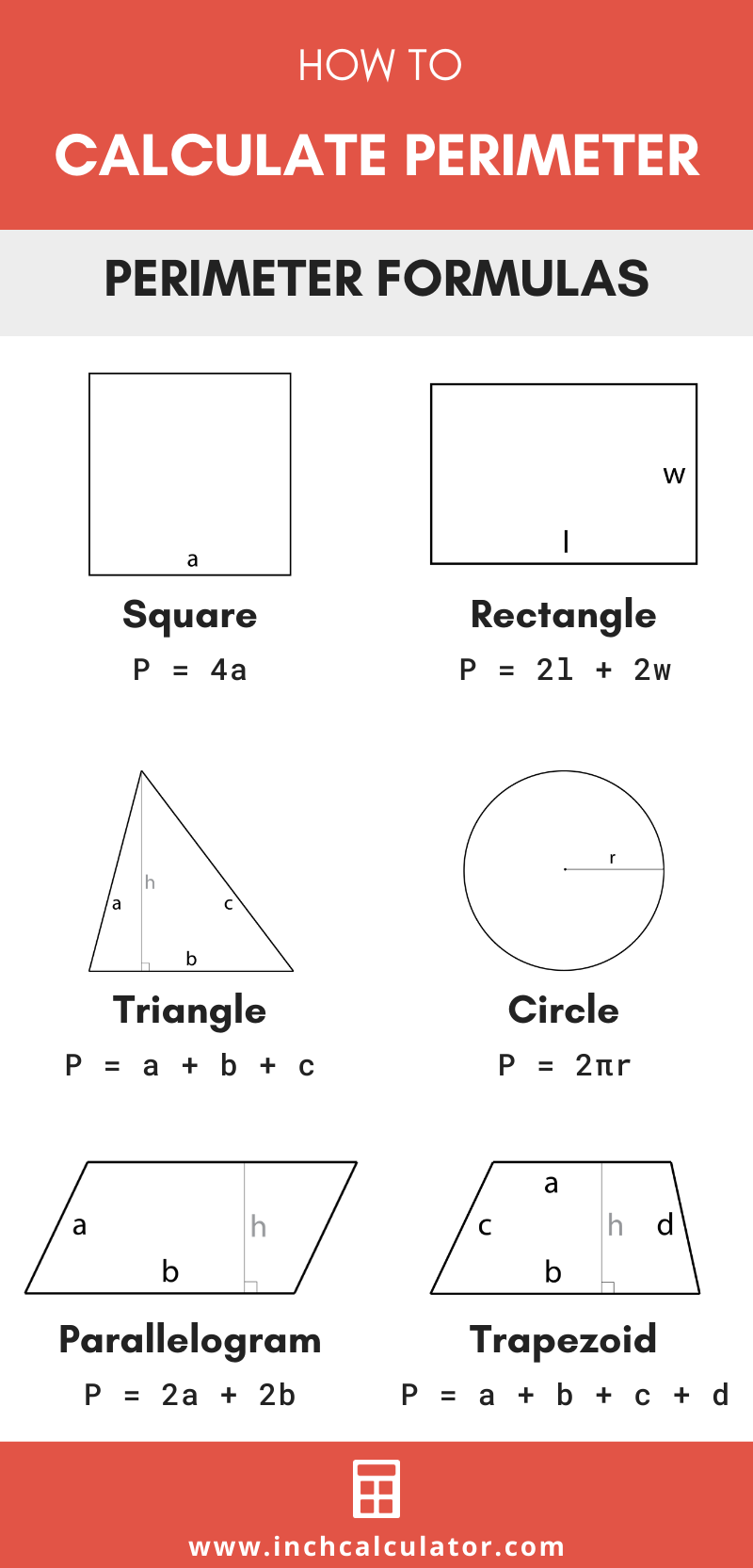
To provide a quick reference for the most common shapes, here is a helpful table summarizing the essential formulas for determining the perimeter of a figure. This resource serves as a handy guide, allowing you to swiftly recall the appropriate calculation method, whether youre tackling simple or more complex measurement tasks. Why is having a concise reference so beneficial? Because it consolidates critical information, making it incredibly accessible and reinforcing your understanding of the various techniques used to successfully discover how to find the perimeter of a figure in diverse geometric contexts.
| Shape | Description | Perimeter Formula | Variables |
|---|---|---|---|
| Square | A polygon with four equal sides and four right angles. | P = 4 * s | s = side length |
| Rectangle | A polygon with four right angles and opposite sides of equal length. | P = 2 * (l + w) | l = length, w = width |
| Triangle | A polygon with three sides. | P = a + b + c | a, b, c = lengths of the three sides |
| Circle (Circumference) | A round shape where all points are equidistant from the center. | C = 2 * π * r OR C = π * d | r = radius, d = diameter, π ≈ 3.14159 |
| Irregular Polygon | Any polygon where sides and angles may vary. | P = Sum of all side lengths | Individual side lengths |
This table acts as a quick memory aid, reinforcing your grasp on how to find the perimeter of a figure by providing immediate access to the core formulas for various shapes. It makes recalling these crucial steps effortless, ensuring you always have the right tool for the job.
What is perimeter and how do you find it? Perimeter is the total distance around the outside edge of a two-dimensional shape; you find it by summing the lengths of all its sides, or by using specific formulas for regular shapes like P = 4s for a square or P = 2(l+w) for a rectangle, and C = 2πr for a circle.
Keywords: perimeter calculation, geometric shapes, measurement guide, area vs perimeter, how to find perimeter of a figure, circle circumference, polygon perimeter, mathematical skills, practical geometry, educational math, home improvement math, spatial reasoning, fundamental geometry.
Definition of perimeter, step-by-step methods for calculating perimeter for various geometric shapes including squares, rectangles, triangles, and irregular polygons, understanding the difference between perimeter and area, practical applications of perimeter in daily life and professional fields, common pitfalls to avoid when measuring boundaries, and essential formulas for quick calculations.
9 Ways To Find Perimeter WikiHow Aid2948380 V4 728px Find Perimeter Step 7 Version 3 How To Find Perimeter In 3 Easy Steps Mashup Math Fig 04 How To Find The Perimeter Of A Rectangular Painting At Lisa Rubino Blog Tutors Perimeter Of A Polygon Formula
Calculating Perimeter YouTube Blog Mashup Math Perimeter Banner How To Find The Perimeter Of A Shape Algebra Study Com Skd1ok61r5 Finding Perimeter How To Work Out Perimeter What Is
Geometry Math Topic Guides FREE How To Find Perimeter Us Featured Image Perimeter Of Figures How To Find The Perimeter Of A Shape 9 Steps 5c7a24b3 Ad51 4e2e 97c8 How To Find The Perimeter Of A Shape 9 Steps With Pictures Find The Perimeter Of A Shape Step 9 Version 2 Perimeter Math How To Find Perimeter Definition Formulas Examples Perimeter Us Featured Image
Perimeter Of A Formula How To Calculate Perimeter Of NWEA MATH REVIEW THIRD GRADE Jeopardy Template Perimeter O SQ 2 Perimeter Math How To Find Perimeter Definition Formulas Examples Perimeter Of The Figure How To Find Perimeter Math Steps Examples Questions How To Find Perimeter Image 20 US
How To Find Perimeter In 3 Easy Steps Mashup Math Ex 05B Perimeter Of Figures How To Find The Perimeter Of A Shape 9 Steps Perimeter Of Simple Closed Figures Carolynn Shelko Thumbnail L How To Calculate The Perimeter Of A Composite Figure Free Worksheets
How To Calculate The Perimeter Of A Square And A Rectangle YouTube Perimeter Of A Polygon Find The Perimeter Of A Rectangle With Vertices Calculator Jesenia How To Calculate Perimeter Equilateral Pentagon Geometric Of Pentagon Tutors Perimeter Of A Regular Pentagon Example
Perimeter Of Compound Shapes GCSE Maths Steps Examples Perimeter Of Compound Shapes Example 1 Step 1 Image 2 Perimeter Of A Rectangle Kids The Perimeter Of A Square 1 1024x538 Master PERIMETER AREA Step By Step GUIDE Find The Perimeter And Area Of The Shaded Figure Below Word Problems On Area And Perimeter Free Worksheet With Answers Perimeter Of Irregular Figures
Area And Perimeter Of Figures Per1 Perimeter Formula For A Rectangle All About Rectangles Properties Perimeter Of Rectangle Example 1024x576 How To Find The Perimeter Of A Rectangular Painting At Lisa Rubino Blog Tutors Perimeter Of A Rectangle Formulas How To Find Perimeter Class 5 6 7 Finding Perimeter Of Different
Perimeter Of A Rectangle 10 Examples Definition Formula How To How To Find Perimeter Of A Rectangle Triangle Sides Perimeter At Reva Forbes Blog Tutors Perimeter Of Triangle Equilateral Perimeter Of Compound Shapes GCSE Maths Steps Examples Perimeter Of Compound Shapes Image 1 300x245